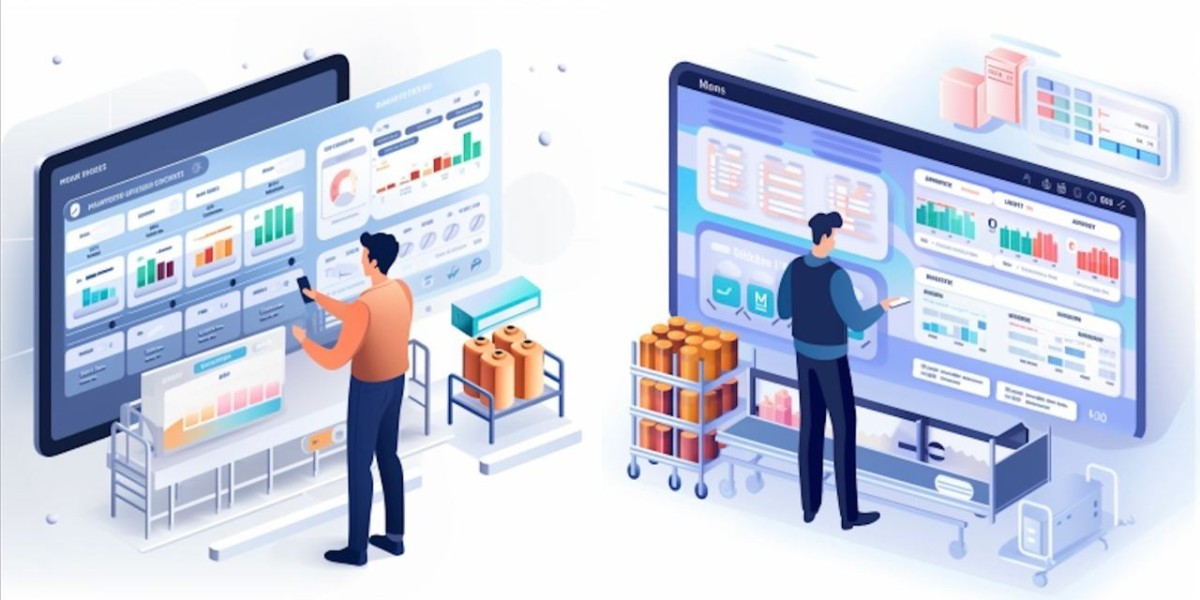

Artificial intelligence (AI) has emerged as a transformative force in inventory forecasting and demand planning, enabling businesses to move beyond traditional, static models toward dynamic, data-driven decision-making. By harnessing AI’s ability to analyze vast datasets, detect complex patterns, and adapt to changing market conditions, companies can enhance forecast accuracy, reduce stockouts or overstock scenarios, and improve overall operational agility.
Avenga - Custom Software Development specializes in innovative retail software solutions powered by AI. Learn more at https://www.avenga.com/retail/
The Challenges of Traditional Inventory Forecasting and Demand Planning
Conventional forecasting methods often rely on historical sales data and simple statistical techniques such as moving averages or linear regression. While these methods can provide baseline insights, they frequently fall short when dealing with:
Seasonality and trends: Retail demand fluctuates widely due to seasons, holidays, and promotions.
External factors: Market disruptions, economic indicators, weather, and social trends impact demand unpredictably.
New product launches or SKU changes: Historical data may be insufficient or irrelevant.
Complex supply chains: Multi-echelon inventory systems require synchronized planning across locations and suppliers.
Changing consumer behaviors: Shifts in preferences or channel usage can invalidate static forecasts.
These complexities often lead to inaccurate predictions, resulting in costly excess inventory or missed sales opportunities due to stockouts.
How AI Transforms Inventory Forecasting and Demand Planning
Advanced Data Integration and Processing

AI-powered systems ingest and process diverse data types far beyond sales history alone. These include real-time point-of-sale (POS) data, inventory levels, promotions, pricing, supplier lead times, marketing efforts, social media sentiment, and even macroeconomic variables. By fusing these heterogeneous sources, AI gains a more holistic understanding of demand drivers.
Machine Learning for Pattern Recognition and Prediction
Machine learning (ML) models excel at identifying intricate and nonlinear relationships in data. They can detect seasonal peaks, promotional impacts, and customer buying cycles while continuously learning from new data to adapt forecasts dynamically. Unlike static statistical methods, ML models improve over time by self-calibrating against actual outcomes, reducing forecast errors.
Techniques such as recurrent neural networks (RNNs) or gradient boosting optimize demand predictions at SKU or category levels across different geographies simultaneously.
Scenario Planning and Simulation
AI enables generating multiple demand scenarios based on "what-if" analyses, helping planners understand potential risks and opportunities. For example, it can simulate the impact of supply chain disruptions, sudden demand spikes, or changing marketing tactics on inventory requirements, allowing companies to build resilient strategies and buffer plans.
Real-Time Forecast Adjustments and Automated Replenishment
By continuously monitoring sales and supply chain events, AI systems automatically adjust forecasts in near real-time. This agility empowers automated replenishment processes to trigger timely purchase orders or stock transfers, minimizing human intervention and shortening reaction times.
Demand Sensing and Customer Behavior Insights
Demand sensing leverages AI to identify very short-term demand fluctuations ahead of traditional forecasts by analyzing granular signals from POS and online channels. Furthermore, AI can profile customer segments and preferences, enabling more personalized inventory assortments and marketing campaigns aligned with predicted buying patterns.
Business Benefits of AI-Enhanced Inventory Forecasting
Improved Forecast Accuracy: AI-driven models consistently outperform traditional approaches, reducing forecast errors by 20-50% in many applications.
Optimized Inventory Levels: Businesses hold the right stock at the right time, lowering carrying costs and reducing obsolescence.
Reduced Stockouts and Lost Sales: Better prediction of demand spikes and replenishment timings enhances product availability and customer satisfaction.
Greater Supply Chain Agility: Organizations can respond swiftly to demand shocks, promotional events, or supplier delays.
Enhanced Collaboration: Unified AI platforms foster better alignment between sales, marketing, and supply chain teams via shared data and insights.
Sustainability Gains: Reduced waste and efficient logistics contribute to environmental goals.
Implementing AI in Inventory and Demand Planning
Data Quality and Infrastructure
A prerequisite for effective AI forecasting is clean, integrated, and timely data. Companies must invest in data lakes or warehouses that unify transactional, operational, and external data streams. Advanced ETL (extract, transform, load) processes and governance ensure reliable inputs.
Choosing the Right AI Models and Tools
Working with experienced AI providers or building custom machine learning models tailored to industry specifics is critical. Off-the-shelf solutions may lack the nuance needed for unique product mixes, seasonality, or channel complexities. Collaborations with vendors like Avenga can accelerate model development and deployment.

Cross-Functional Alignment and Training
Successful AI adoption demands involving key teams early—supply chain planners, merchandisers, sales, and marketing—to ground forecasts in real-world knowledge and validate outputs. Training teams on interpreting AI insights fosters trust and optimal decision-making.
Continuous Monitoring and Model Refinement
AI models are not “set and forget.” Continuous performance monitoring allows detection of model drift, data quality issues, or changing market conditions. Regular retraining and fine-tuning maintain accuracy and relevance.
Ethical and Privacy Considerations
Respecting data privacy standards and ethical use of customer information is a must. Transparent policies and secure architectures mitigate risks and build stakeholder confidence.
Real-World Applications
Retail giants and e-commerce platforms have successfully deployed AI-driven inventory planning. AI models help brands optimize promotions by accurately forecasting uplift and required stock, plan omni-channel inventory to balance online and in-store availability, and identify emerging trends early via social and market data.
Advanced AI tools also support just-in-time (JIT) inventory and vendor-managed inventory (VMI) programs, reducing capital lockup and supplier risks.
How Avenga Supports AI-Driven Retail Solutions
Avenga - Custom Software Development delivers comprehensive AI and data analytics solutions designed for retail and supply chain environments. From data integration and custom machine learning models to real-time analytics dashboards and automation workflows, Avenga helps businesses harness AI to optimize inventory and demand planning.